CSEC Mathematics SBA Guidelines
Complete guide to School-Based Assessment for CSEC Mathematics with suggested topics, marking scheme, and sample project
What is SBA?
The School-Based Assessment (SBA) is an integral part of student assessment in CSEC Mathematics. It allows students to apply mathematical concepts to real-world situations and develop critical thinking skills. The SBA contributes significantly to your final grade.
Key Points:
- SBA is worth 30 marks (20% of your total score)
- You must complete ONE project
- Maximum report length: 1000 words (excluding appendices)
- You can work in groups of up to 6 students
- Deadlines are set by your school
SBA Structure & Requirements
Project Components
Your SBA report MUST include these 6 sections:
- Project Title - Clear, concise, related to real-world problem
- Introduction - Objectives, background, purpose, and method
- Method of Data Collection - How and when data was collected
- Presentation of Data - Tables, charts, graphs with proper labels
- Analysis of Data - Mathematical calculations and interpretations
- Conclusion - Findings based on analysis, recommendations
Important Notes:
- Show ALL calculations and working
- Use proper mathematical notation
- Include at least one table and one graph/chart
- Ensure data is genuine and accurate
- Cite all sources properly
Marking Scheme (30 Marks Total)
| Section | What's Assessed | Marks |
|---|---|---|
| Project Title | Clear, concise, real-world relevance | 2 |
| Introduction | Objectives, background, purpose, method | 6 |
| Method of Data Collection | Appropriate methods, clear description | 3 |
| Presentation of Data | Tables, graphs, organization, accuracy | 8 |
| Analysis of Data | Mathematical concepts, calculations, steps | 6 |
| Conclusion | Based on analysis, related to objectives | 3 |
| Overall Presentation | Logical flow, grammar, organization | 2 |
Assessment Profiles:
- Conceptual Knowledge (CK): 9 marks
- Algorithmic Knowledge (AK): 12 marks
- Reasoning (R): 9 marks
Suggested SBA Topics
Consumer Mathematics
- Comparing hire purchase vs cash payment
- Analyzing cell phone plans
- Grocery price comparisons
- Bank interest rates comparison
Statistics & Probability
- Sports team performance analysis
- School exam results analysis
- Traffic flow patterns
- Weather data analysis
Measurement & Geometry
- Optimizing garden/yard space
- Room painting cost calculation
- Packaging optimization
- Floor tiling patterns
Real-World Applications
- Fuel efficiency comparison
- Phone screen time analysis
- Water usage patterns
- Electricity consumption study
Advertisement Space
Check out this CSEC Mathematics Guide on Amazon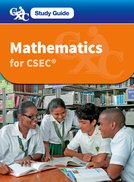
Educational resources, tutoring services, or study materials could be advertised here
Contact for advertising opportunities
Sample SBA Project
Here's an example of how to structure your SBA project:
Project Title
"Comparative Analysis of Hire Purchase vs Cash Payment for Electronics at Two Local Stores"
Introduction
Objective: To determine whether hire purchase or cash payment is more economical when purchasing electronics.
Background: Many consumers face the dilemma of choosing between paying cash or using hire purchase options...
Data Collection Method
Visited two electronics stores (Store A and Store B) to collect prices for:
- Smartphone (Samsung Galaxy S23)
- Laptop (Dell Inspiron 15)
- Television (55" LED Smart TV)
Recorded cash prices and hire purchase terms (down payment, monthly payments, duration, interest rates).
Sample Calculations
Total Hire Purchase Cost Formula:
Total = Down Payment + (Monthly Payment × Number of Months)
Interest Calculation:
Interest = Total Hire Purchase Cost - Cash Price
Percentage Interest:
% Interest = (Interest ÷ Cash Price) × 100
Expected Findings
- Hire purchase typically costs 15-25% more than cash price
- Store A has better hire purchase terms than Store B
- Recommendation: Save and pay cash when possible
Tips for Success:
- Choose a topic that interests you
- Start early and plan your time
- Collect genuine data
- Show ALL calculations
- Proofread your final report
- Submit before the deadline
Problem Solving Strategies
1. Use Simple Numbers
Replace complex numbers with simple ones to understand the problem, then apply the solution to original numbers.
2. Sketch Diagrams
Visualize problems using diagrams, charts, or graphs to understand spatial relationships.
3. Create Tables
Organize data in tables to identify patterns and relationships between variables.
4. Look for Patterns
Identify recurring patterns in data that can lead to mathematical generalizations.
Additional Resources
Official CXC Resources:
- CXC Official Website
- Mathematics Syllabus (Download from CXC website)
- Past SBA samples (Ask your teacher)
- Online Registration System (ORS) for submission
Important Dates:
- Check with your teacher for school deadlines
- Final submission to CXC is usually in March/April
- Start your SBA at least 3 months before deadline
- Allow time for teacher feedback and revisions